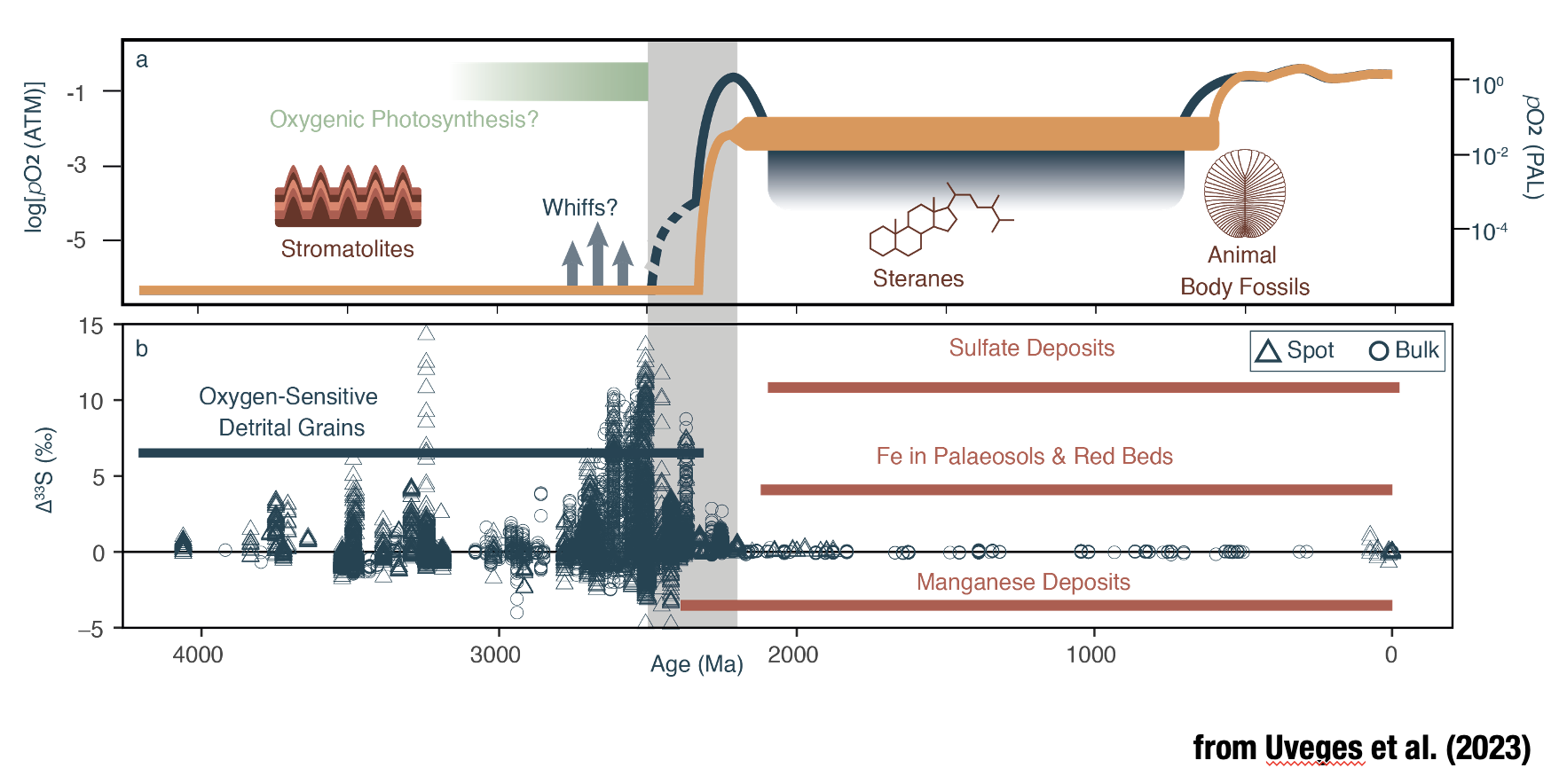
Redox evolution of the nitrogen cycle
The biochemically motivated transformations in the nitrogen cycle are highly dependent on the redox state of the environment. The transition from a mostly anoxic atmosphere and ocean to one that was well oxidized was accompanied by continual perturbation to the nitrogen cycle and nitrogen isotopes are sensitive to these transitions. My group and collaborators from outside of SU have utilized the flexibility of the nano-EA system to be able to analyze a range of organic phases to uncover how incipient oxygenation affected the nitrogen cycle.
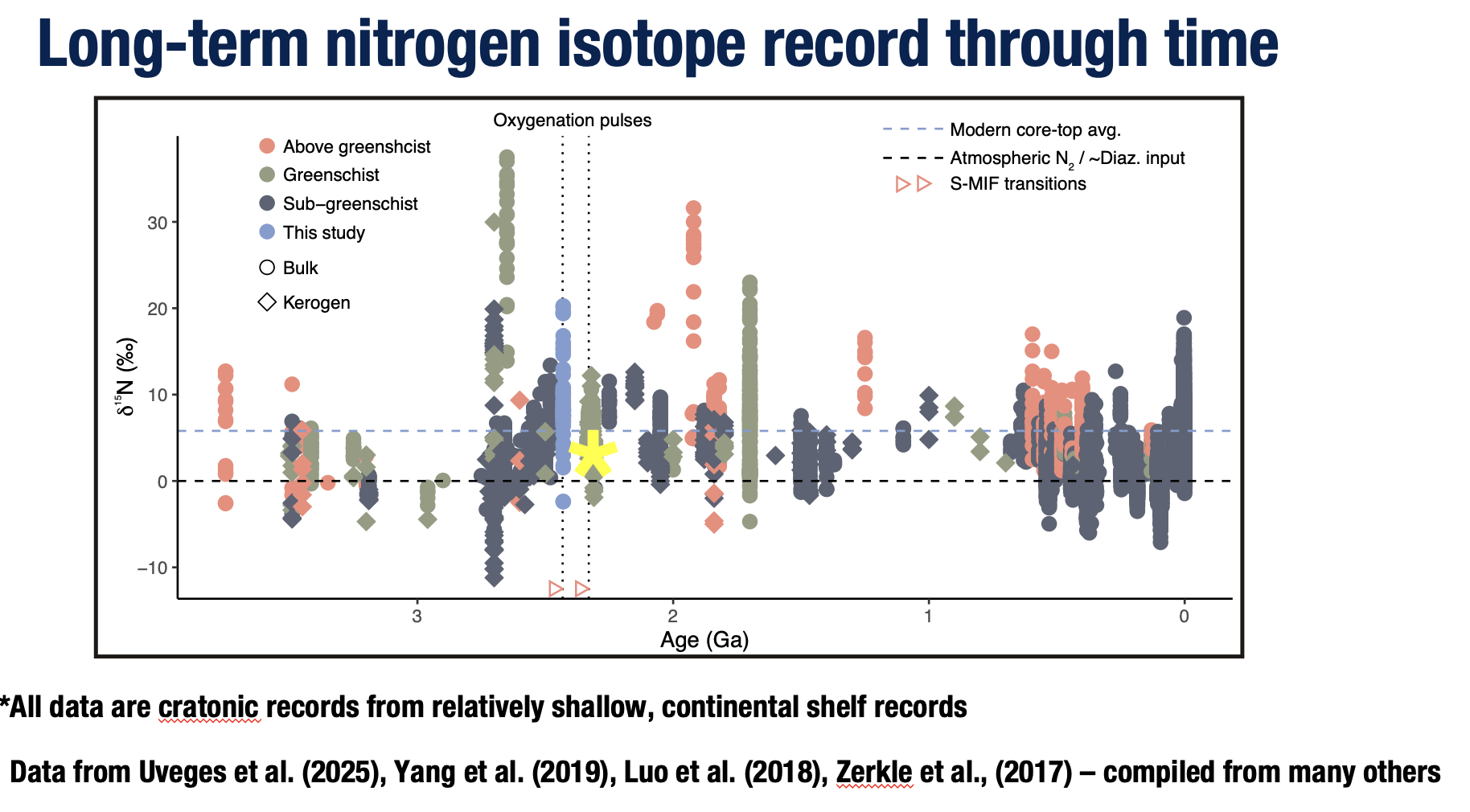
With students and collaborators we have filled in important gaps in the long-term nitrogen isotope record, but with large swaths of the Proterozoic that remain under-studied. Curiously, the low values found during the Archean (near -5‰) are only approached during the Phanerozoic, and particularly during the Cretaceous.
See: Yang et al. (2019); Mettam et al. (2019); Luo et al. 2018; Zerkle et al. (2017)
Influence of oxygen on the evolution of eukaryotes
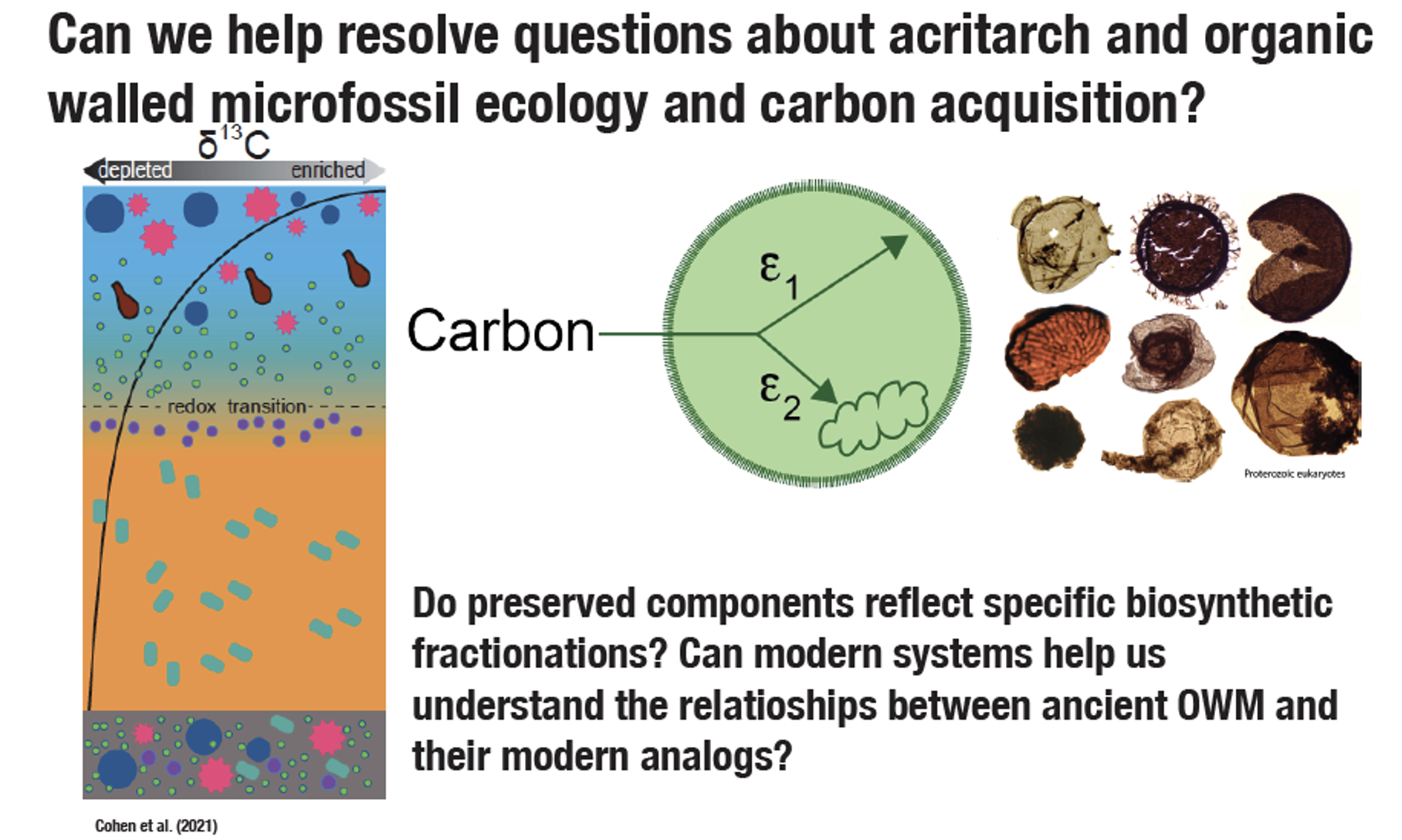
The evolution of eukaryotes has long been linked to the expansion of oxygen containing environments. Oxygen may be key to the evolution of the eukaryote crown groups, but there is growing evidence that the eukaryotic cell evolved in anoxic environments. With collaborator Phoebe Cohen (Williams College) we have been probing the stable isotope ecology of early eukaryotes with the carbon isotope composition of organic walled (acritarch) microfossils. We analyze individual organic walled microfossils to help constrain their methods of carbon assimilation and isotopic composition of carbon substrates to pinpoint their ecology more clearly than can be determined by sedimentary redox proxies and fossil morphology alone.
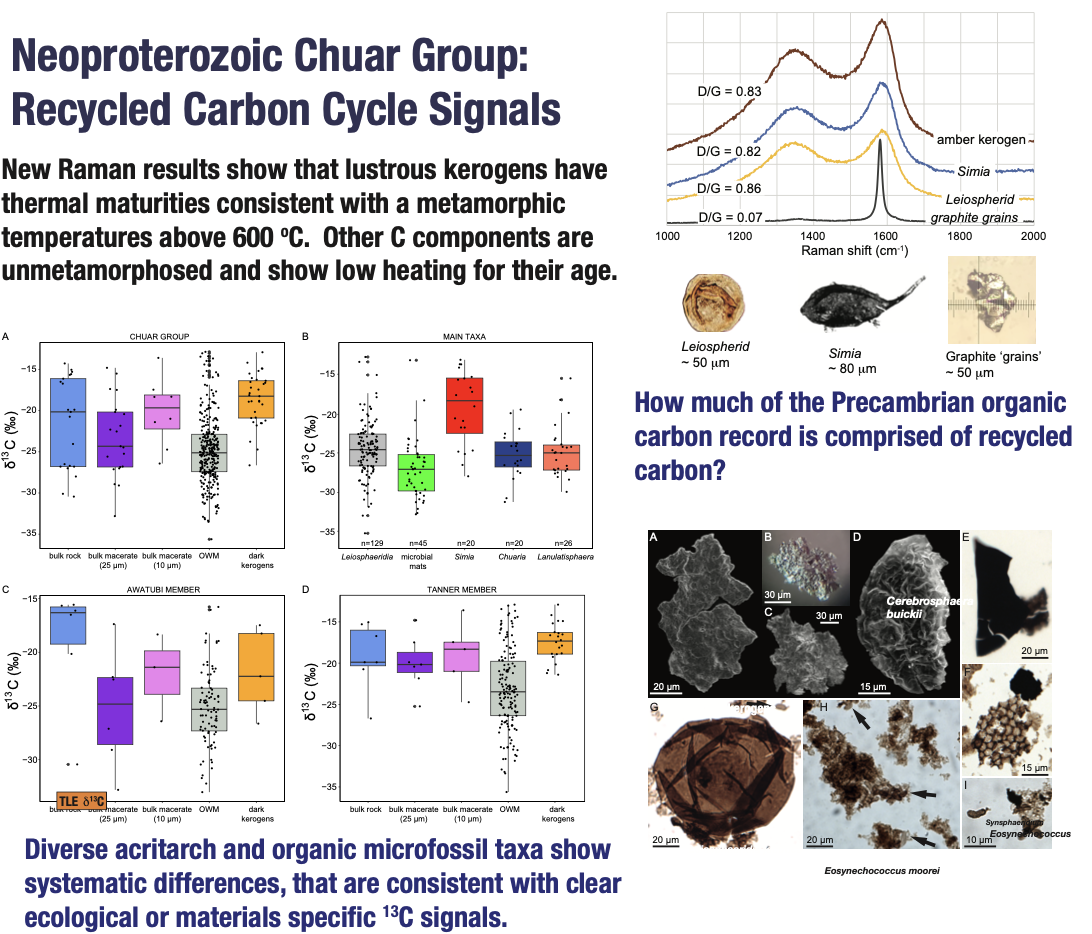
Viewing the spectrum of carbon containing elements – where does the secular carbon cycle signal reside?
By breaking the carbon containing fraction of sedimentary rocks into their individual components we can begin to evaluate the range of sources of carbon and how they affect the bulk carbon isotope values (which are often used with the assumption the represent the carbon isotope composition of primary photosynthate). Research with former post-doctoral scholar Heda Agic (UCC, Ireland), Phoebe Cohen (Williams College) and Susannah Porter (UCSB) we showed that tectonically recycled graphite may exert a strong influence on the bulk carbon isotope composition through notable positive isotope excursions. See Agic et al. (2025)