
My group’s work on modern environments has focused on understanding the effects of nitrogen loading, hypoxia, trophic relationships and developing models for better understanding ancient environments.
Shell Nitrogen for modern and recent nitrogen cycle dynamics
The dynamics of the sedimentary environment makes achieving a sub-annual record of nitrogen cycle dynamics almost impossible. Organisms like filter feeding bivalves grow in an accretionary fashion and preserve environmental nitrogen cycle data within the proteins that are protected and preserved within their shells. My group and my collaborators have explored how to analyze shell nitrogen using nano-EA and what we can learn about modern nitrogen loading and hypoxia.
One of the key questions in modern environmental remediation efforts is what environmental conditions were like prior to significant human perturbations. The sub-fossil record of bivalves provides a window into the recent past to allow for reconstruction of the nitrogen cycle at a high resolution over the last several centuries.
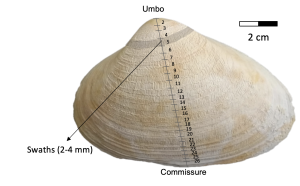
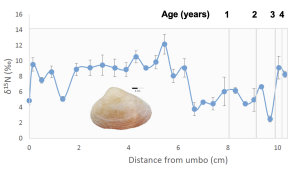
My group and collaborators have ongoing research in coastal Florida, Long Island Sound (with Greg Dietl – Cornell University and SU PhD student Heather Gunn) and the Gulf of Mexico (with Paul Harnik – Colgate University).
Stable Isotope Ecology
The nano-EA has enabled a range of exciting new projects that focus on answering questions about photosymbiosis in giant clams, the feeding habits of baleen whales, lobsters and the life histories of anadromous fishes using eye lenses. In these cases, small sample sizes preclude conventional isotope analyses.
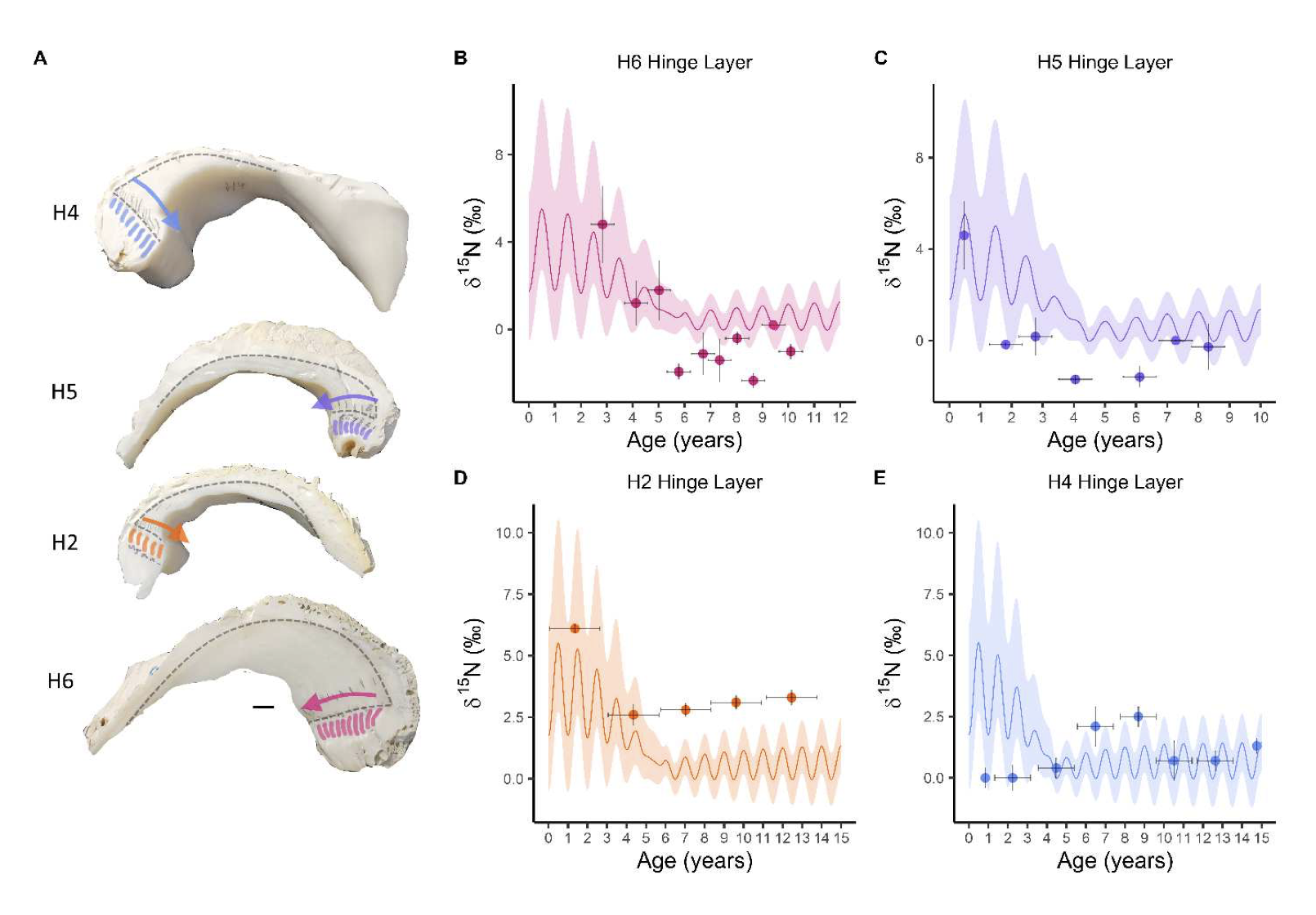
The study summarized in the figure above with collaborators Dan Killam, Rowan Martindale and former grad student Shiv Das on giant clams shows how nitrogen metabolism changes across early ontogeny with the acquisition of photosymbionts.
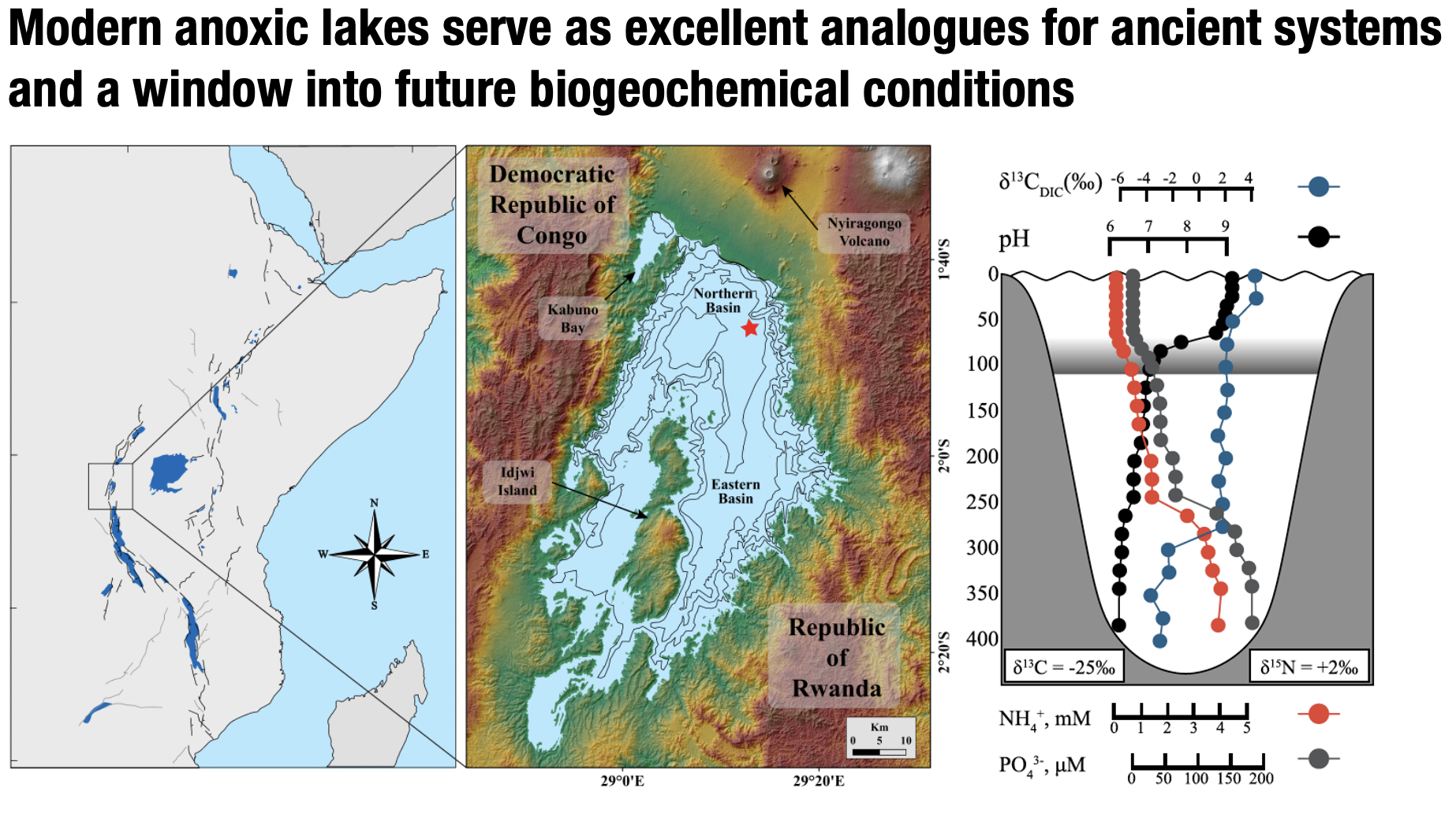
Rift lakes like Lake Kivu and local resources like Green Lake serve excellent natural laboratories to help us understand ancient episodes of anoxia, the Archean and Proterozoic and the trajectory of modern ecosystems that are experiencing temperature and nutrient related deoxygenation.
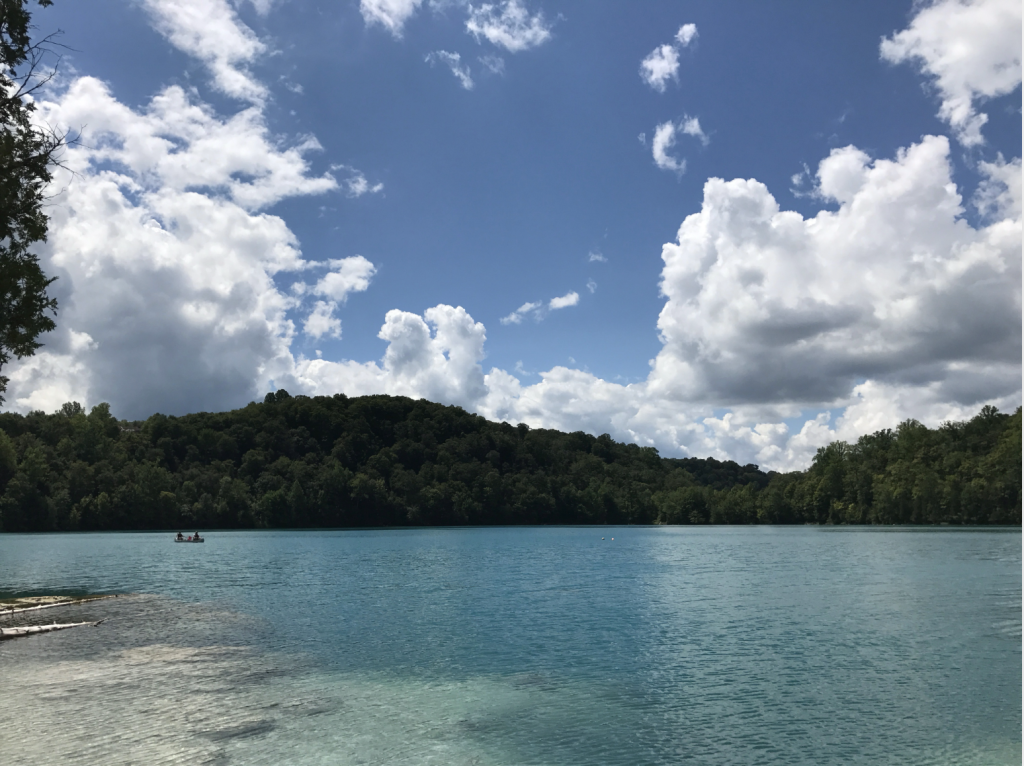
The picture above is of Green Lake in Fayetteville, New York, just a few miles from Syracuse University. It is a glacial plunge pool basin that is 52 meters deep. The subcropping Syracuse Formation contains abundant evaporites that help establish permanent salinity stratification at 20 meters. At this level a dense microbial plate dominated by purple and green sulfur bacteria exists in an arrangement that is thought to be similar to marine conditions during the Proterozoic. In the foreground, the white shoreline is formed by microbially mediated carbonate precipitation – thrombolite microbialites.